
Kendall Research Team Members

Prosper Ogbonna
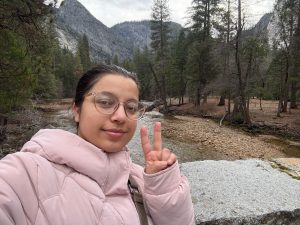
Meena Pandey
Degree Objectives: PhD in Horticulture and Agronomy
Areas of Interest: Life Cycle Assessment, Geospatial analysis, Circular Economy, Net-Zero and Decarbonization Strategies, Biogeochemical modeling

Elias Marvinney
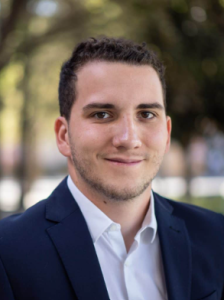
Simon Duex
Degree Objectives: PhD in Energy Systems
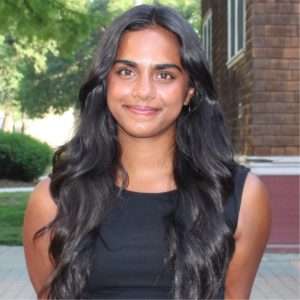
Vedika Iyer
Degree Objectives: B. Eng Civil Engineering.
Areas of Interest: agricultural life cycle assessment and sustainable transportation

Gordon M. Magne
Degree Objectives: Master of Science, Energy Systems, 2027.
Areas of Interest: geopolitics and global mineral markets; California’s implementation of the critical mineral and battery supply chain.

Israel Okeyinka
Degree Objectives: Master of Science in Environmental Policy and Management.
Areas of Interest: Sustainable waste management, Circular Economy, producer responsibility, and decarbonization strategies

Ashley DePew
Degree Objective: Ph.D., Energy Systems.
Areas of Interest: Life Cycle Assessment, Climate Policy, Renewable Energy, Net Zero Energy, Behavioral Decision Making.

Lucas Salgado
Degree Objectives: Master’s and PhD in Transportation Technology and Policy.
Areas of Interest: Alternative fuel policies, Biofuel LCA, Advancing clean energy, Fleet Electrification Transition.

Aljoharah Alhobayshi
Degree Objective: Master of Environmental Engineering.
Areas of Interest: Water and wastewater treatment and conveyance systems

Laura Restrepo
Degree Objective: PhD student in Energy Systems.
Areas of Interest: Transportation decarbonization, zero-emission vehicle adoption, freight electrification, and clean mobility across diverse geographic contexts.

Lauren Mizerak-Mohun
Degree Objective: B.S. in Environmental Engineering.
Areas of Interest: life-cycle assessments to better understand how to reduce the environmental impacts of different types of EV batteries.

Yunzhu Chen
Degree Objectives: Ph.D. student in Energy Systems.
Areas of Interest: industrial ecology, life cycle assessment, and sustainable transportation.
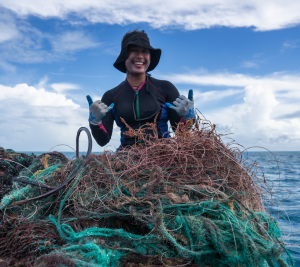
Keolohi Sabate
Degree Objective: Ph.D Candidate in Environmental Engineering.
Areas of interest: Seeks to better understand the impacts of plastic pollution through Material Flow Analysis and socio-cultural impact assessment modeling to improve policy and mitigation strategies for island communities